
Recognized internationally, October 16th marks World Food Day – a day to highlight the importance of food in building healthier communities. Through donations, food purchasing, and farming, the Ottawa Food Bank provides emergency food to a network of nearly 100 programs across the city. When 1 in 4 households in Ottawa face food insecurity, the food decisions we make matter because they have a direct impact on our neighbours’ health and wellbeing. For that reason, distributing healthy, nutritious foods is a top priority for the Ottawa Food Bank.
So, how do we decide what is distributed? Behind these decisions is a thoughtful process guided by nutrition expertise and community input.
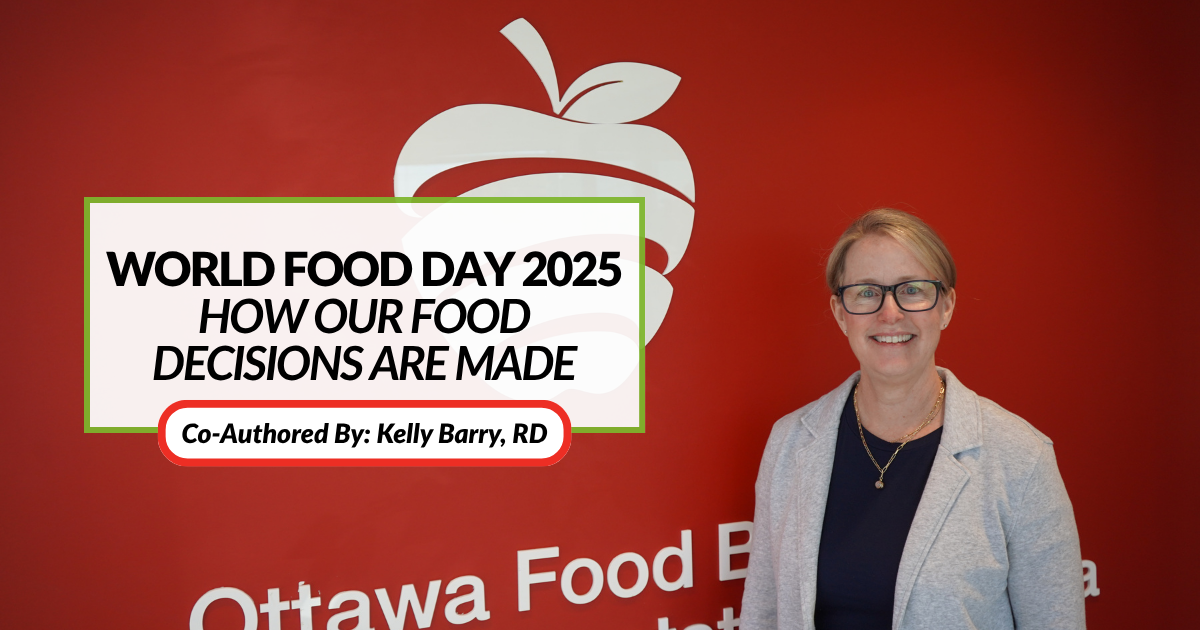
Kelly Barry is the Ottawa Food Bank’s in-house Registered Dietitian, a licensed nutrition expert, who helps inform the food-related decisions we make for the 8.3 million pounds of food we distribute annually. Kelly applies her expertise, refers to Canada’s Dietary Guidelines for healthy eating*, and connects with frontline agencies to understand the food needs of our neighbours. From this, the Ottawa Food Bank identifies our most needed items for donations, items for purchasing, and culturally specific foods.
During food drives, you may have seen our request for most needed non-perishable items, such as pasta, canned fruit and vegetables, and canned fish. These staple items provide a variety of nutrients and support healthy eating, especially when items are whole grain, lower in sugar, sodium, and saturated fats. These items complement the fresh foods typically provided in a food bank hamper, and can be prepared through versatile ways.
Our most needed non-perishable items include:
Grains | Vegetables and Fruit | Proteins |
– Lower sugar, higher fibre cereals – Whole grain rice or other whole grains – Whole grain pasta | – Lower sodium canned vegetables – Canned fruits with no added sugars
| – Lower sodium canned fish (salmon, tuna) – Canned legumes (chickpeas, beans, lentils) – Dry legumes (chickpeas, beans, lentils) – Peanut butter |
Thanks to monetary donations, we purchase 43% of the food we distribute, including milk, eggs, bread, fresh fruits and vegetables, meat, and poultry. Our bulk buying abilities allow us to access these foods at reduced costs compared to an individual buyer. These fresh foods provide key nutrients including high quality protein, fibre, vitamins, and minerals and reflect the healthy eating recommendations set out by Health Canada. Access to nutrient-dense food supports physical and mental well-being for people of all ages. This food is essential for healthy development and disease prevention. By focusing on minimally processed, nutritious foods, Ottawa Food Bank strives to contribute to a healthier Ottawa.
As a diverse city, there are varied cultural and dietary needs and preferences across Ottawa. We strive to support this diversity through the purchase of basic staple foods, Halal meat, and when possible, items that support dietary restrictions such as non-dairy milk.
In addition to this work, we support individual Community and Emergency Food Banks with an annual grant called the Global Marketplace grant. This allows agencies to purchase the culturally appropriate or special dietary foods most needed by their unique community.
A complete breakdown of our food distribution can be found in our annual Year in Review.
By balancing donated non-perishables, fresh purchases, and culturally specific items, the Ottawa Food Bank is able to better support neighbours experiencing food insecurity. On World Food Day, we’re reminded that food is more than sustenance; it’s a foundation for health, dignity, and community. At the Ottawa Food Bank, we’re committed to making food decisions that reflect this belief.
*As an organization committed to Truth and Reconciliation, we acknowledge the colonial history of Canada’s Food Guide. While it continues to shape contemporary health and dietary practices, it carries a legacy of harm. We are committed to learning from Indigenous knowledge holders and community organizations, and to supporting Indigenous food sovereignty as part of our efforts to challenge colonial ideas and practices.

Recent Comments