BLOG

The Ottawa Food Bank’s Guide to the 2026 Municipal Election

On October 26, 2026, Ottawa will head to the polls to elect a new mayor and a new City Council. But how do we keep food insecurity on the agenda? 

Everyone has a role to play. 

Food security is not the responsibility of one organization or one level of government; it requires action from governments, community organizations, businesses and residents working together. 

This election, ask candidates where they stand on food security. Ask how they will turn commitments into action, and make sure your voice is heard. When everyone has the opportunity to afford the food and essentials they need to thrive, all of Ottawa is stronger. 

Want to know how to get involved this election? Consult our guide below! 

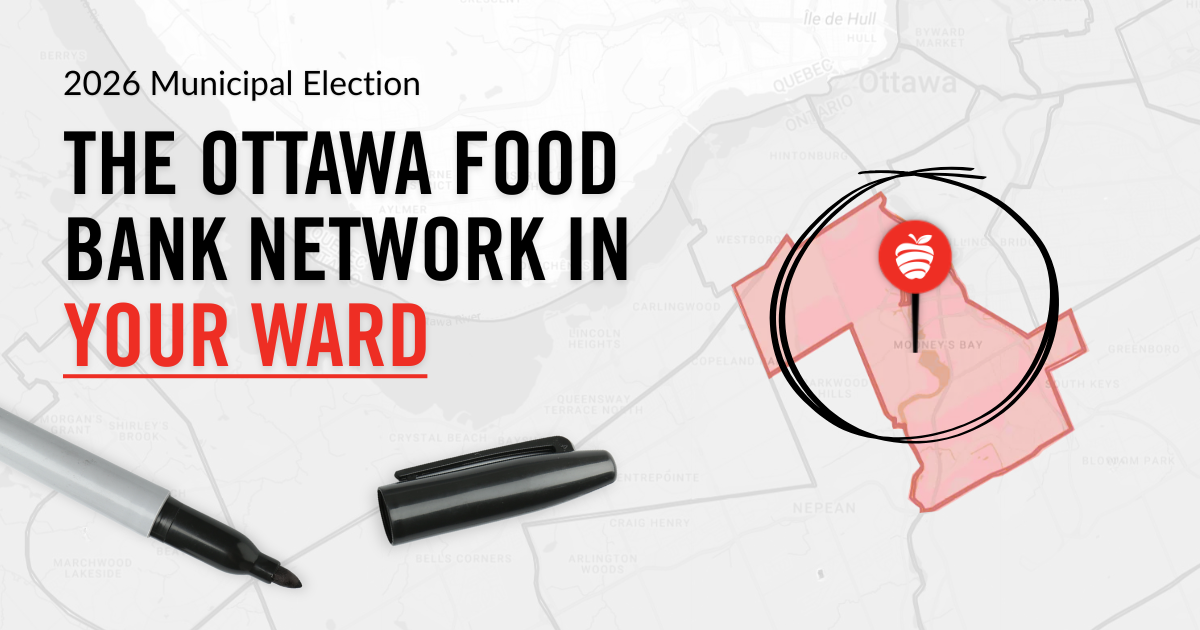
The Ottawa Food Bank Network in Your Ward 

One of the best ways to understand food insecurity in Ottawa is to look at what is happening in your own neighbourhood. The Ottawa Food Bank network reaches communities in many municipal wards. Our member agencies provide food and other supports to people who need them, often alongside services related to housing, health, employment, education and community connection. 

Explore the Ottawa Food Bank network in your ward: 

Who is running in your ward?

The first step in participating in the municipal election is knowing who is on your ballot. 

The City of Ottawa’s Who is running in my ward? tool allows you to enter your address and find the certified candidates for Mayor, City Councillor and School Board Trustee that you are eligible to vote for. 

Once you know who is running, consider asking candidates how they would help build a more food-secure Ottawa. 

Questions to ask candidates?

You don’t need to be an expert in municipal politics to participate in this election. Ask candidates: 

  • What role do you believe the City of Ottawa should play in addressing food insecurity? 
  • How will you support the City’s commitment to addressing the root causes of food insecurity? 
  • How will you support affordable housing and other policies that help people afford the essentials? 
  • How will you ensure community organizations have the resources and stability they need to serve their communities? 
  • How will you work with provincial and federal governments to address the policies driving food insecurity? 
  • How will you ensure the voices and experiences of people with lived experience of food insecurity inform City decisions? 

Election resources 

You don’t have to navigate the election alone. 

The Ottawa Community Food Partnership (OCFP), in partnership with the City for All Women Initiative (CAWI), has developed a collection of election resources to help Ottawa residents understand municipal government, learn about their ward, talk with candidates and connect food security to municipal policy. 

The resources include Municipal Election Care Cards covering issues such as food security, housing, income and transportation, as well as a Caring Conversations Guide to help residents have meaningful conversations about the issues that matter to them. 

We also encourage residents to consult the City of Ottawa’s election information for official information about voting, eligibility, voting opportunities and accessibility. 

Important 2026 election dates: 

  • October 1-4: Special Advance Voting Days 
  • October 16: Advance Voting Day 
  • October 26: Voting Day 

Voting locations are scheduled to be open from 10:00 AM to 8:00 PM on voting days, with some exceptions for long-term care facilities and retirement homes. 

The Ottawa Food Bank is non-partisan.

 Food insecurity is a non-partisan issue. As a charitable organization, the Ottawa Food Bank is non-partisan: we do not endorse candidates or political parties. 

Our role is to encourage informed civic participation and to make sure that food insecurity—and the experiences of people affected by it—are part of the municipal conversation. We encourage everyone to learn about the candidates, ask questions, participate in their community and make a plan to vote. 
Your voice matters. Whether or not you can vote. 

Voting is one important way to participate in our democracy, but it is not the only way to make your voice heard. 

If you are not eligible to vote, you can still play an important role in shaping the future of your community. Your experiences, ideas and questions matter and elected officials need to hear from the people who live, work and access services in their communities. 

You can: 

  • Ask candidates and councillors questions about food security, affordable housing, transit, poverty reduction and other issues that affect your community. 
  • Attend an all-candidates meeting or community event and speak up about the issues that matter to you. 
  • Share your experience with your local councillor or candidates. You don’t need to be a policy expert. Your lived experience is valuable information. 
  • Write an email or letter to your councillor and ask what they will do to help build a more food-secure Ottawa. 
  • Talk with your neighbours, friends and family about the issues you want to see addressed at City Hall. 
  • Connect with a local community organization and find out how you can get involved. 
  • Follow your City Councillor after the election and keep asking questions. Civic participation doesn’t end when the ballots are counted. 

You don’t have to have all the answers. You don’t need to know how City Hall works. You don’t need to use political language, and you don’t need to speak on behalf of an entire community. Start with what you know. 

What are you seeing in your neighbourhood? What is making it harder for people to afford food? What would make your community stronger? What do you want the next Council to understand? 

These are important questions and elected officials have a responsibility to listen. 

If you have a voice in this community, you have a role in shaping its future.

Facebook
LinkedIn
Threads
Email