
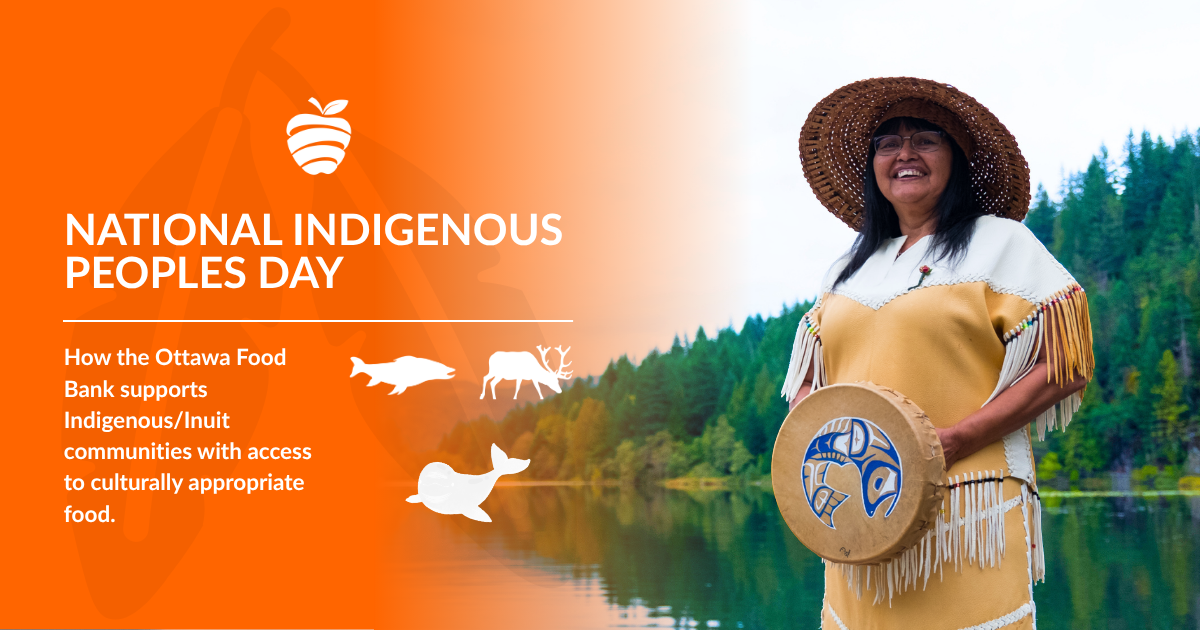
Today, June 21 is National Indigenous Peoples Day, a time to recognize and celebrate the cultures, traditions and contributions of First Nations, Inuit and Métis cultures across Canada. Food is a significant part of their heritage and identity.
“Traditional food represents more than sustenance; they are a vital connection to the land, culture and community, often serving as a way to maintain cultural identity and practices far from their Northern homes.”
- Tungasuvvingat Inuit
First Nations, Inuit and Métis people experience food insecurity and marginalization at significantly higher rates than other groups in Ontario, and across Canada. Limited access to traditional foods make it more difficult for individuals and families to stay connected to their culture and heritage, putting both physical and mental health at risk for these communities.
Purchasing Food with the Global Marketplace Grant
The Ottawa Food Bank’s Global Marketplace Grant makes funding available for network member agencies to purchase foods that reflect the unique heritage and culture of community members accessing food banks in Ottawa, where these foods are often not traditionally found. All three Indigenous/Inuit-led member agencies are supported by this grant: the Odawa Native Friendship Centre, Tungasuvvingat Inuit and Minwaashin Lodge.
Through this funding, Indigenous/Inuit-led member agencies can access Country Food such as:

Arctic Char

Salmon

Muktuk

Seal

Caribou

Moose
Country Food is also essential for ceremonies and gatherings, such as berries for full moon ceremonies, bison burgers and moose stew for gatherings, and corn, beans and squash for Harvest Feasts.
Benefits of Country Food
The Indigenous and Inuit-led agencies explain the immeasurable value of traditional foods:
“Muktuk is a highly valued food... rich in essential nutrients like omega-3 fatty acids and vitamins A and D. Arctic Char is a highly prized fish for its flavour and nutritional benefits, being rich in omega-3 fatty acids and protein. Caribou meat is a staple in the Inuit diet, providing a rich source of protein, iron, and other vital nutrients.”
Beyond nutrition, access to Country Food contributes to mental health and well-being. It can even reduce anxiety, foster a sense of belonging, and create safer spaces for individuals experiencing trauma. Sadly, children who have grown up in urban settings may feel more disconnected from their cultural roots, whether through long distance, or social isolation. Access to Country Food offers a pivotal opportunity to reconnect with their heritage:
“Country food serves as a tactical and flavorful way to learn about Inuit heritage. It connects them to the practices of ancestors, ensuring that cultural knowledge is passed down to future generations”
- Tungasuvvingat Inuit

Photo by: Tungasuvvingat Inuit
But above all, we all know that food also brings people together, creating opportunities for individuals and families to gather, share meals, and celebrate traditions and culture. As Tungasuvvingat Inuit explains:
“This support has had an incredible impact... fostering a sense of connection and well-being for Inuit living far from their northern homes... offering a critical link to Inuit traditions and creating meaningful moments for individuals and families.”
Barriers to Purchasing Culturally Appropriate Food
Unfortunately, there are significant barriers to accessing culturally appropriate food. While this food is often more expensive, especially considering the rising cost of produce, agencies may also face limited storage and kitchen space, making it difficult to store and prepare certain traditional foods. In addition, culturally relevant foods are not always readily available to local retailers, creating a high demand that might require additional shopping trips and staff time, placing further strain on resources. This is exactly why the Global Marketplace matters so much.
National Indigenous Peoples Day
On National Indigenous Peoples Day, we reflect on meaningful ways to support First Nations, Inuit, and Métis communities in Ottawa, led by and rooted in their needs. Ensuring access to culturally appropriate food is one tangible way to honour traditions, strengthen community connections, and support their spiritual, physical, and emotional well-being.The Ottawa Food Bank is so proud to support Indigenous and Inuit-led member agencies through programs like the Global Marketplace Grant. Helping people stay connected to their identity while building cultural resilience and navigating urban challenges is a core part of how we bring all members of our community together.

Recent Comments